
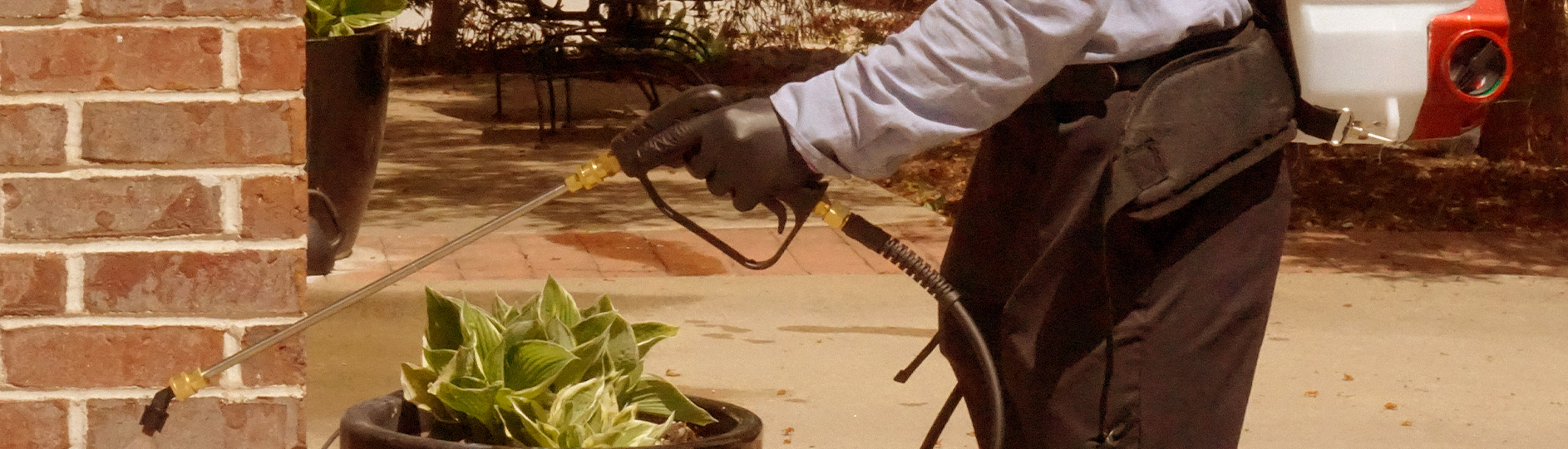
TERMITE CONTROL
Termites work quietly. They don’t swarm the kitchen or turn up in the tub, and by the time anyone notices, the colony has been feeding on your home or business for months or longer. No other pest we treat works that way.
IT STARTS WITH A FREE TERMITE INSPECTION
A licensed Ninefold technician checks your property for active termites, for damage that’s already been done, and for the conditions inviting them in. Then you get a plan and a price, whether that’s baiting, liquid treatment, or both.
GET A FREE QUOTESIGNS YOU HAVE TERMITES
Termites hide their work, so the evidence usually shows up before the insects do. Mud tubes running up foundation walls or crawlspace framing are the clearest sign, along with winged termites in spring or small piles of discarded wings on windowsills.
DAMAGE YOU CAN SEE
Wood that sounds hollow when tapped or gives way under a screwdriver. Paint that bubbles or peels for no obvious reason. Floors that feel soft underfoot, and doors or windows that suddenly stick. Any of these is worth a look.
TERMITE BAITING
Trelona ATBS stations go into the ground in a ring around your property. A termite out foraging finds one and carries the bait home to share it, which is how a colony finishes itself off. Queen included. The stations stay put after that, so the next colony working its way out of the yard hits a station before it ever reaches your foundation.
- Works on the colony, not just the termites you see
- Ongoing protection against new colonies
- One-year re-treatment warranty, renewable with an annual inspection
LIQUID TERMITE TREATMENT
Termidor HE goes into the soil around your foundation. Termites can’t smell it, can’t taste it, can’t route around it, so they cross it and pick it up and pass it along on contact until the nest is gone. Find them already up in the wood, and those galleries get treated right where they sit, with a spray or a foam.
- Undetectable to termites, so they walk right through it
- Requires less drilling and trenching than older liquid treatments
- Five-year re-treatment warranty
FREQUENTLY ASKED QUESTIONS
Moisture and wood contact, mostly. Leaking gutters, poor drainage, firewood or mulch stacked against the foundation, and any place where soil touches wood all make a structure easier to reach. Damp crawlspaces are a particular problem, which is why our Moisture Control service exists.
Termites rarely bite humans and are not aggressive toward people or pets. While soldier termites possess strong mandibles capable of biting in self-defense if handled, these bites are extremely rare, generally cause only mild irritation or a small red bump, and do not spread disease.
It depends on the size of the structure, the type of treatment, and how far the activity has spread. There’s no flat rate worth quoting, which is why the inspection comes first, and the price comes after. Both are free until you decide to move forward.
That depends on your property. Baiting works well where drilling and trenching would be disruptive, or where you want stations left in place for long-term monitoring. Liquid treatment creates a treated zone in the soil around the foundation and works faster on an active infestation. Some properties get both, and your technician will explain which makes sense and why.
No, and the difference shows up in what you find. Subterranean termites nest in the soil and build mud tubes to reach wood, which is what most properties in our service areas deal with.. Drywood termites live inside the wood itself and leave behind fine wood dust. Your technician identifies which type you have, because the treatments aren’t the same.
Fix the conditions and keep the protection in place. That means clearing gutters, grading soil away from the foundation, ventilating crawlspaces, moving firewood and mulch back, and sealing cracks and utility gaps. On our end, we keep visiting: checking for new activity, reapplying treatment where it’s needed, and renewing your warranty at the annual inspection.
This is a question we get asked often. The answer is usually no, but it depends on your policy, so check yours to be sure. Most insurers treat termite damage as preventable maintenance rather than sudden loss, which means repairs often come out of pocket. That’s the strongest argument for catching termites early, and it’s why the inspection costs you nothing.