
Protect Your Richmond Home from Termite Swarms This Spring
If you see a termite swarm in or near your Richmond home, it means an established colony is close by, and it is time to schedule a termite inspection. Swarms usually show up on warm spring days right after a rain. Spring in Richmond is beautiful, but it also marks the beginning of termite swarms. Termites can infest your home at any time of year because termites don’t take a season off. However, spring is the time of year when termites most often mate. They do this by coming out of the ground (or structures) in a swarm, finding a mate, shedding their wings, and heading underground to start new colonies. Here is how to spot a swarm, what it means and how to keep termites out.
Why termite swarms occur in spring
Although termites will occasionally mate at other times of year, spring is typically termite swarmer season. After a cool winter, the temperatures warm up in the spring, providing the ideal conditions for a termite swarm.
Termite swarmers usually wait for a spring rain shower, then appear soon after the rain stops. They typically seek a light source, so if the termites are already indoors, you’ll likely find a swarm near a window.
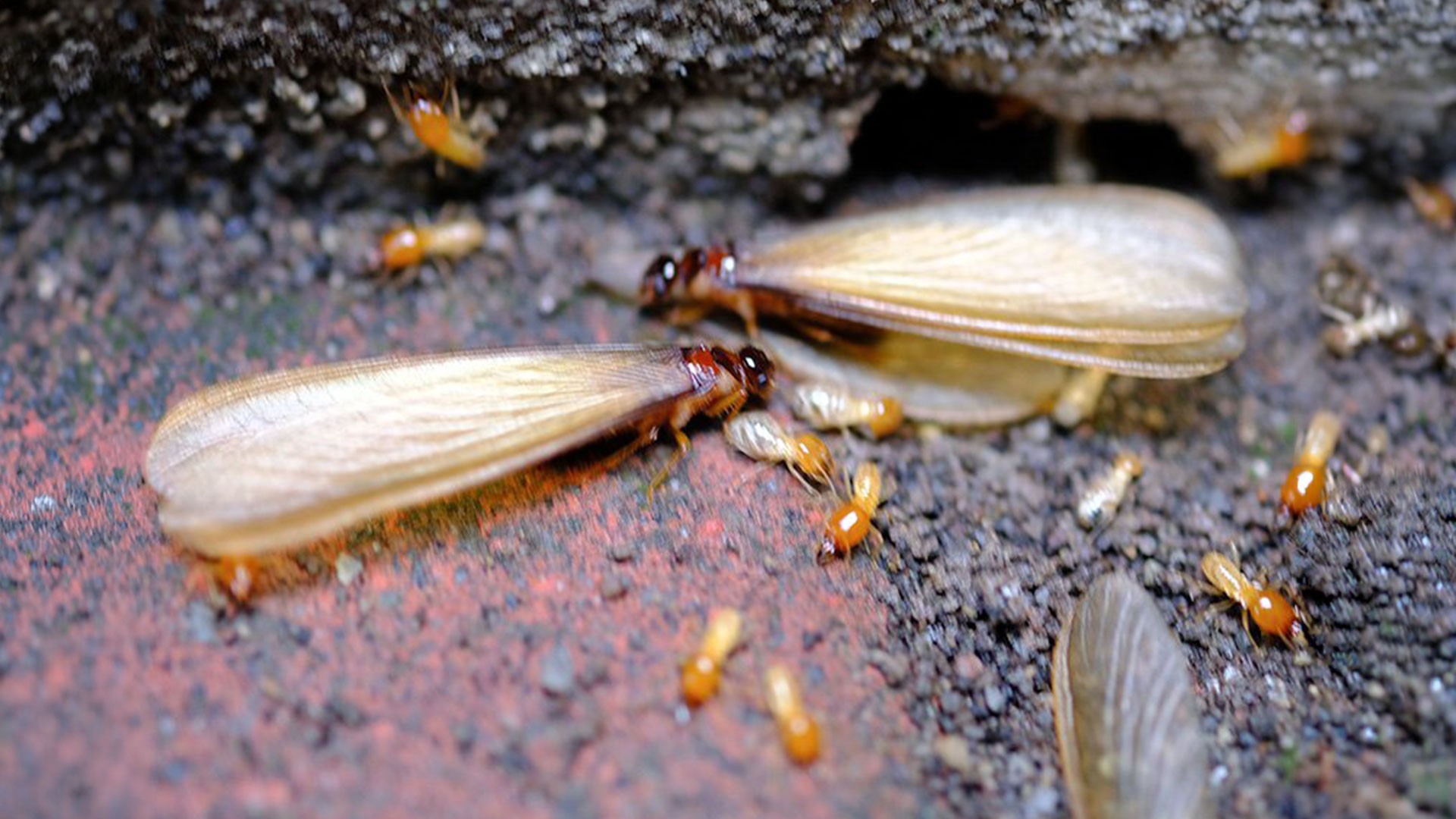
Termite swarmers look similar to flying carpenter ants. They are usually under half an inch long, including the wings, and have dark brown to black bodies, six legs, a pair of antennae, and two sets of wings. If you’re unsure if the bugs you’re seeing are termites or ants, there are a few key differences:
- Termites have wide waists, while carpenter ants have pinched waists.
- Termites have straight antennae, while carpenter ants have elbowed antennae.
- Termites have two sets of equal-length wings, while carpenter ants have two sets of wings that are different lengths.
One termite swarm can have hundreds to thousands of termites in it. If you see a massive group of these pests or find piles of discarded wings, you have found a termite swarm.
What to do if you spot a termite swarm
If you witness a termite swarm or find the remains of one, don’t panic, but don’t ignore it either. Termite swarms indicate that an established infestation is nearby. If you found the swarm indoors, it means that termites are already in your Richmond home. If you found the swarm outside, it’s possible they haven’t gotten inside yet, but it’s also possible that they have.
The first thing you need to do when you find a termite swarm is to call a professional pest control company. When you contact Ninefold Pest, we’ll visit your home to perform a thorough termite inspection. Our trained and experienced pest technicians will determine if termites are present and, if so, how severe the infestation is and how widespread the damage they’ve caused has become.
Once our inspection is complete, we’ll review our findings and next steps. We’ll recommend a treatment plan to eliminate active infestations. No matter the inspection outcome, we’ll encourage preventative services to ensure termites stay out of your Richmond home in the future.
Other signs of a termite problem
Although seeing a termite swarm is often the most definitive way to identify a termite infestation, it’s not the best way to determine one since it usually means that there is already a well-established colony nearby. Knowing other signs of a termite infestation can help you identify it earlier. These signs can all indicate a termite problem:
- Mud tubes along your foundation walls.
- Hollow-sounding wood when you knock on it.
- Windows and doors that are difficult to open and close.
- Paint or wallpaper that is bubbling or peeling.
- Walls that bulge, floors that buckle, or ceilings that sag.
Five steps to prevent a termite infestation
It’s far better to prevent termites than to get rid of them after they’ve gotten into your house. Try these termite prevention tips to avoid a termite infestation:
- Fix moisture problems. Repair leaks, clean gutters and extend downspouts so water drains away from the foundation.
- Remove wood-to-soil contact. Keep siding, deck posts, trim and steps from touching the soil.
- Move wood away from the house. Store firewood and lumber off the ground and well away from the foundation.
- Pull mulch back. Keep mulch a few inches from the foundation and do not pile it high against the house.
- Schedule yearly inspections. A professional can spot mud tubes and early damage long before you would.
Choosing the right termite control services in Richmond
If you do not currently have termite protection for your Richmond home, it’s time to take action. Choosing the right termite control service starts by looking for a licensed and insured company. It should employ experienced and knowledgeable pest technicians who take the time to understand your needs.
At Ninefold Pest, our team is fully licensed and insured, and our termite control services in Richmond are built around inspection first. Depending on your needs, we provide termite inspections, bait system installation and maintenance, and liquid termite treatments, ensuring your home is completely protected from these wood-destroying insects all year.
Whether you’re concerned about termite swarms this spring or want to protect against termites before they can infest, now is the time to request a free termite inspection or call 888-902-3540. Our Richmond team serves homeowners across Central Virginia. For more warning signs, see signs of termites in Virginia homes.
Richmond Termite Swarm FAQs
Usually between March and May, often on a warm, sunny day right after rain.
No. Swarmers do not bite or eat wood. They are a sign of a mature colony nearby, and that colony is what causes damage.
Vacuum up the swarmers and wings, save a few in a sealed bag for identification and schedule a professional inspection. A swarm indoors means termites are already in the structure.
Most swarmers die within a day or two if they cannot reach soil, but the colony that produced them is still active.