
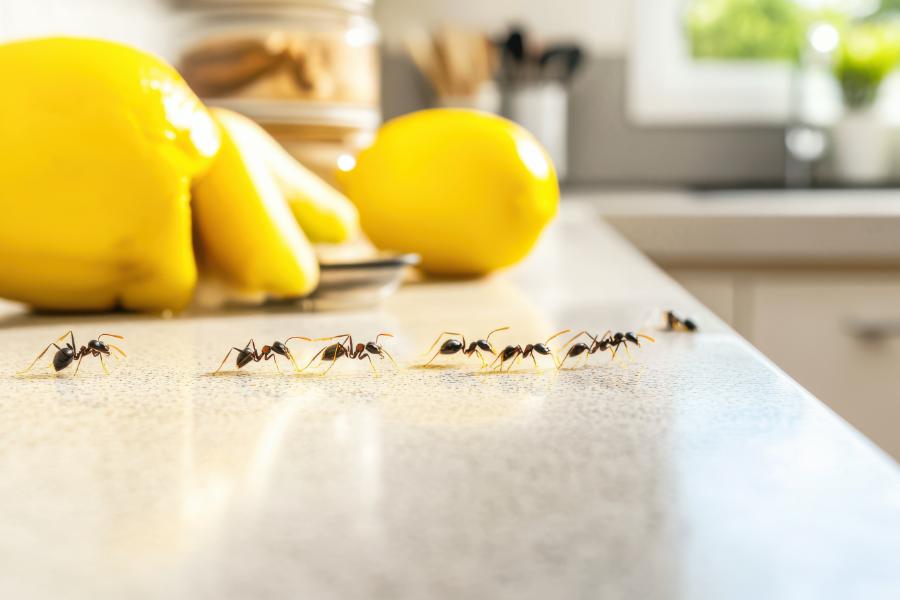
How to Tell If You Need Professional Pest Control
Most pest problems start the same way. One spider in the garage. A line of ants by the dishwasher. A wasp hovering near the eaves. You handle it, the problem goes away for a week, and then it comes back. The hard part is knowing when to call a pest control professional instead of buying another can of spray. The honest threshold has less to do with how many bugs you see and more to do with what kind of activity is happening, where, and how often.
When DIY Treatment Stops Being Enough
Store-bought sprays handle the bug in front of you. They almost never reach the source of the problem. If you treat the same kitchen baseboard three weekends in a row and the ants keep returning, the colony is somewhere you cannot reach with a can. That is the line where DIY treatment becomes a tax instead of a solution.
💡 Key Takeaway: Repeat activity in the same spot, even at low volume, is the single clearest sign that a colony or harborage has been established. The bug you see is the symptom. The colony you do not see is the problem.
Signs You Should Call a Pro
1. Recurring activity in the same spot
One sighting is a fluke. Two is a pattern. Three or more sightings of the same pest in the same location within a couple of weeks means there is a stable food source, water source, or harborage nearby. Common examples we see in homes across Alabama, Virginia, Utah, and Pennsylvania:
- Ant trails that reappear within days of cleaning the counter.
- Wasps repeatedly building in the same soffit corner.
- Roach sightings that move from one room to the next as you spray the first.
- Mice droppings that show up in the same drawer week after week.
2. Multiple species at once
If you are seeing ants and silverfish and the occasional roach, your home has conducive conditions that are friendly to several pest groups. Treating one species at a time with retail products leaves the conditions intact. A professional inspection looks at the structural and environmental factors that explain why several pests are present, then builds a treatment plan that addresses the cause, not the most visible symptom.
3. Structural risk
Some pests are nuisance. Some pests damage the building. The list of pests that can compromise structural integrity is short and worth memorizing.
| Pest | What It Damages | Why It Needs a Pro |
|---|---|---|
| Subterranean termites | Structural wood, framing, subfloors | Damage hidden until significant, treatment requires soil work |
| Carpenter ants | Damp wood: window frames, deck posts, roof joists | Active colony often nested inside the wood being damaged |
| Carpenter bees | Bare wood: eaves, fascia, deck rails | Repeat drilling year after year, treatment needs to address the next generation |
| Rodents | Wiring, insulation, drywall, HVAC ducts | Fire risk from chewed wiring, contamination of insulation |
| Powderpost beetles | Hardwood flooring, antique furniture, structural wood | Damage looks cosmetic but indicates active infestation |
If you suspect any of these, a free inspection costs you nothing, and waiting can cost a lot. Termites alone cause billions of dollars in damage across the US every year, and most homeowners insurance policies do not cover it, so the repair bill lands on you.
4. Health-sensitive households
Kids who crawl on the floor, pets that lick their paws after a walk, anyone with asthma or a known sting allergy, anyone who is pregnant or immunocompromised. These households need a treatment plan built with the household in mind, not a generic spray label that warns to keep people and pets off the surface for two hours. Our 9X Protection Plan starts with a free inspection that includes a conversation about who lives in the home and what they react to. Family- and pet-safe products are the default unless a specific problem requires something stronger, and even then we explain what is being used and where.
5. The bug is one you cannot identify
If you cannot tell whether the small brown ant in the kitchen is an odorous house ant or a young carpenter ant, the treatment differs entirely. Same with termites and flying ants during spring swarm season. A misidentification costs you a season of activity at best, a chewed-out wall stud at worst. Pros identify the species, then match the treatment.
💡 Key Takeaway: Species ID is the part of the job most DIY treatments skip. The same can of “ant killer” treats five common species, and at least two of them respond better to a different active ingredient and a different placement strategy.
What a Free Inspection Actually Gets You
A free general pest inspection is one of the lowest-friction ways to find out whether you have a real problem or a passing one. Done well, the inspection covers interior and exterior, looks for conducive conditions like moisture and entry points, identifies the species driving the activity, and ends with a written assessment. The findings should tell you three things before any treatment is recommended.
- What pest is present and at what life stage. Adults versus active reproductive activity is a different problem.
- Where the pressure is coming from. Indoor harborage, exterior nesting, conducive conditions in the crawlspace or attic, all change the treatment plan.
- What is reasonable to expect from treatment. Some pests are cleared in one visit. Some require a 2-3 week recheck. Some need a multi-month plan because the lifecycle has to be broken at more than one stage.
That last point is where most retail products fail. A can of spray kills the adults you see. It does not break the cycle for pests that spend most of their life as eggs, larvae, or pupae out of sight. Fleas are the cleanest example. Treat only the adults and you will be back to square one in three weeks when the next round emerges from the carpet.
The Inspect, Protect, Prove Framework
Good pest service follows a sequence. We call it the 9X Protection Plan, and the structure is simple. Inspect first, before any product is applied. Identify the species, the source, and the conducive conditions that allowed the activity to start. Protect with a treatment plan matched to what the inspection found. Same-day and next-day service options are available in most of our service areas when the problem is urgent. Prove the work by recapping what was completed and providing a detailed video so the homeowner sees exactly what was treated and where.
The proof step matters more than people expect. Pest work happens in places homeowners do not go: behind appliances, under crawl spaces, on roof eaves at 20 feet. A short video showing the treated areas, the product used, and the technician’s observations turns the service from “they were here for an hour” into a document the homeowner can reference later if pressure returns.
💡 Key Takeaway: Inspection-first methodology costs the company more time on the front end, but it produces treatment plans that actually work. Skipping inspection in favor of spray-and-pray is how DIY products work, and it is also how some discount services work. Ask whether the inspection comes before the quote.
Quick Decision Guide
If you are still on the fence, this is the rough version of how we think about it on a first call. The right answer depends on what is actually happening at the property, which is why professional pest control starts with the free inspection rather than over the phone.
- One isolated sighting, no recurrence: Clean the area, seal an obvious entry point if you find one, watch for a week. Most one-off sightings do not return.
- Recurring sightings of one species: Worth a free inspection. Could be a small colony, could be a conducive condition that can be fixed in one visit.
- Multiple species, multiple rooms: Call. Several species at once almost always points to environmental conditions that need addressing.
- Termites, carpenter ants, rodents, or carpenter bees: Call. These are the structural-risk pests. Time is the variable that determines repair cost.
- Visible activity plus kids, pets, or health concerns in the home: Call. Even routine treatments should be planned around the household, and a pro can build that plan.
The reality is that most homeowners wait too long. We see it constantly in our Alabama and Virginia branches during spring termite season, in our Pennsylvania branches during fall rodent ingress, and in Utah anytime a pavement ant colony decides to come indoors after a heavy rain. A free inspection costs nothing. Treatment, when it is needed, is almost always cheaper than the damage the pest would have caused by the next season.
Seeing a pattern that matches one of the signs above? Book a free inspection and a Ninefold technician will tell you exactly what you are dealing with and whether it needs treatment. Prefer to talk it through first? Call 888-902-3540.
Professional Pest Control FAQs
If the same trail comes back within a week of cleaning, the colony is established and will keep returning. One trail near a door after a heavy rain is usually a passing visit. A trail that shows up in the same spot three times in two weeks means a colony is nesting in or under the house, and that is where retail baits stop being enough. Our ant control service starts by finding where that colony lives.
A general pest inspection is free with most reputable companies, including Ninefold. A technician walks the property, identifies the pest and the conditions drawing it in, and gives you a recommended plan and price with no obligation. Specialty inspections, like a wood-destroying organism (WDO) report for a home sale, usually carry a fee because they require a formal written report.
No. Subterranean termites build mud tubes from a colony that lives in the soil, often well away from the tube you can see. Killing the termites in the tube does nothing to the colony. Real termite control uses a liquid treatment around the foundation or a bait system around the perimeter, and both require professional equipment and licensing.
Within the week if you can. Hidden activity usually starts months or even years before you see a sign. By the time mud tubes, sawdust-like frass or hollow-sounding wood show up, the colony has already been working, so a quick inspection gives you the clearest picture of how far it has gone.
A free inspection means a licensed technician looks at your actual property and recommends a plan based on what they find. A phone quote is an estimate based on home size and pest type. A phone quote can work for routine service, but for recurring activity, suspected structural pests or several pests at once, ask for the in-person inspection.