
Termite Warning Signs and When to Call a Professional
Termite Damage Starts Quietly
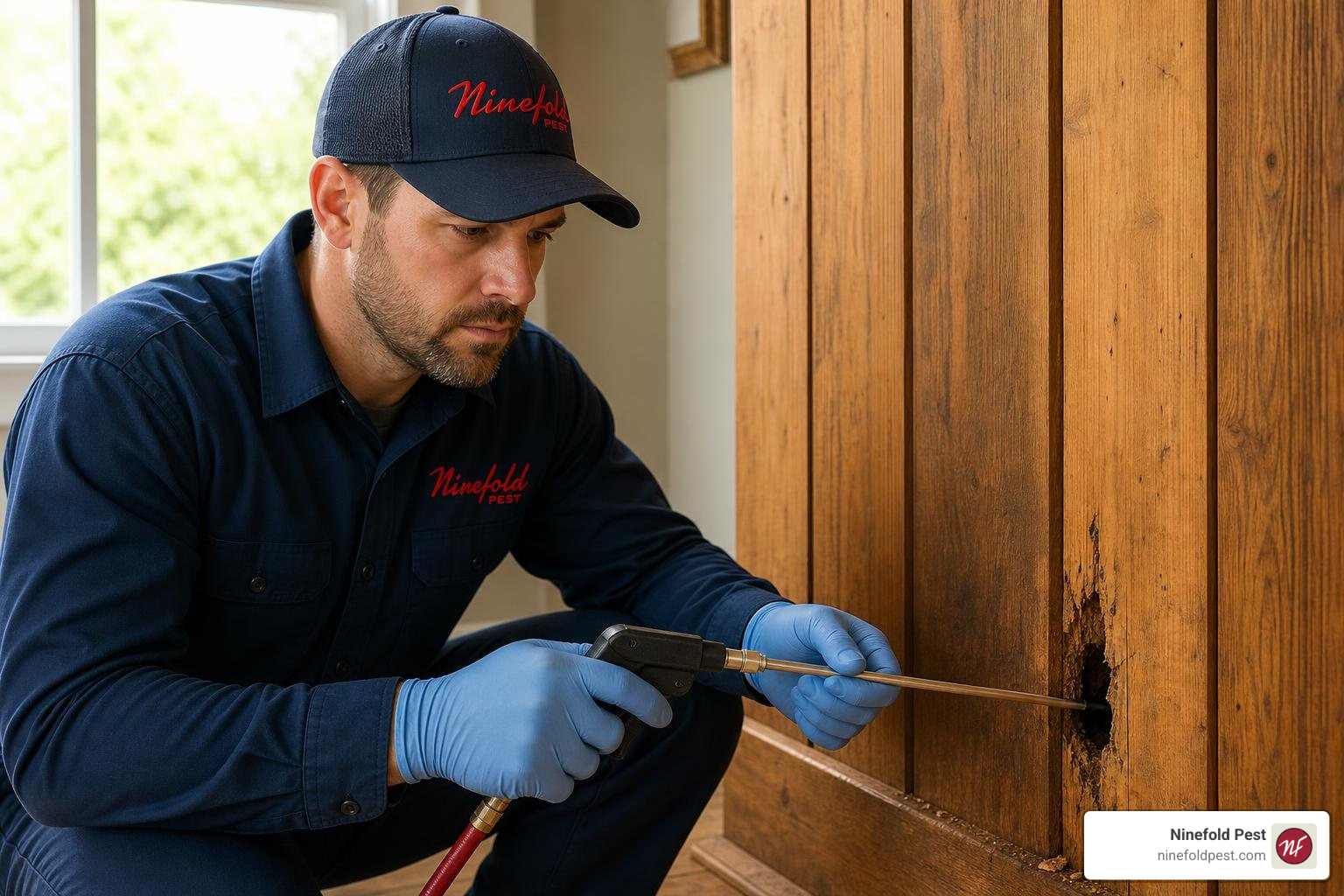
A professional termite extermination service starts with a detailed inspection to locate active insects, determine the exact variety, and see how far they have traveled. These findings shape the treatment strategy and maintenance schedule for your house. If you notice dirt tunnels, shed wings, or small piles of droppings that look like wood shavings, booking an inspection is much safer than waiting for obvious damage to show up.
Some termites travel from the soil into a home, while others live inside dry wood. That difference affects what a professional looks for during an inspection and which service may fit the problem. Here at Ninefold Pest, we begin with a thorough walkthrough so you know what we discovered and what steps come next.
Learn more about our approach to termite control and how professional care safeguards your home.
Spotting Infestations and Knowing When to Call a Professional
Termites eat wood from the inside out, which means a growing problem can hide behind drywall, under subfloors, and inside support posts for a long time. By the time floors feel springy or window frames start sticking, the wooden framing of the house may already have hidden structural weakness. Catching problems early is the most reliable way to keep your living space safe and avoid large repair bills.
While over-the-counter sprays can seem convenient, store-bought products rarely reach deep into hidden wood where the main colony lives. A licensed technician checks the accessible wood, lower areas of the home, and likely entry points during an inspection. Homeowners can benefit from identifying signs of termite activity early to halt wood-destroying insects before they spread through the house.
Warning Signs That Call for Professional Help
Active colonies leave clear physical clues as they feed and move around a structure. Checking your foundation, crawl space, and main living areas for these common warning signs helps you act quickly:
- Dirt Tunnels: Termites that travel from the soil can build narrow mud tunnels along foundation walls and wooden areas under a home as they search for wood.
- Shed Wings: Flying reproductive insects drop their wings after finding a mate. You will often see these clear, papery wings on indoor windowsills, near exterior lamps, or trapped in cobwebs.
- Flying Swarmers: Winged adults emerge in groups during warm spring or summer days to pair off and start new colonies near your property.
- Hollow-Sounding Wood: When you tap baseboards, wall studs, or door trim with a hard tool handle, infested wood sounds hollow or thin because the center has been eaten away.
- Wood Pellets: Drywood varieties push their waste out through tiny pinholes, leaving small piles of gritty, six-sided pellets that look like ground coffee or coarse sand on floors and windowsills.
- Bubbling Paint and Soft Drywall: Moisture brought in by feeding insects can cause interior wall paint to blister, peel, or look like water damage even when pipes are dry.
- Sticking Doors and Windows: As wood in the home shifts and moisture builds up, doors and windows can become difficult to slide, open, or latch.
If you see any of these indicators, arranging an evaluation with a trained specialist is the safest step forward.
Professional Treatment Options for Termites
A professional inspection helps identify where termite activity is happening and how far it has spread. Ninefold Pest offers baiting, liquid treatment, or a combination of both when appropriate, so the recommendation can match the property and the problem.
| Feature | Termite Baiting | Liquid Termite Treatment |
|---|---|---|
| What it is | Bait stations are placed in the ground so termites can carry the treatment back to the colony. | A liquid treatment is applied in the soil around the foundation. If termites are already in the wood, the affected area may also be treated directly. |
| When it may fit | A lower-disruption option for properties that need ongoing protection. | An option for active termite problems that may need a faster response. |
| How long it lasts | Includes a one-year re-treatment warranty that can be renewed with an annual inspection. | Includes a five-year re-treatment warranty. |
| Upkeep needed | Professional checks and an annual inspection are needed to maintain the renewable warranty. | Follow the technician’s recommended follow-up schedule and report new signs of activity. |
For additional help recognizing different wood-destroying pests around your property, check our termite species profiles in the pest library.
What to Expect During a Professional Visit
When a pest professional arrives, the visit follows a clear process based on the home and the signs of termite activity:
- Inspection: The technician checks accessible lower areas, the outside of the home, plumbing openings, and exposed wood for termite activity and damage.
- Recommendation: The technician explains whether baiting, liquid treatment, or both may fit the property and why.
- Service and Follow-Up: After you approve the plan, the technician completes the agreed work and explains what happens next, including any follow-up visits or warranty requirements.
The overall scope of work depends on several factors, including the total square footage of the building, foundation style, how long the colony has been active, and whether exterior wood repairs are needed.
Household Safety and Everyday Prevention Tips
Before treatment begins, the technician explains any preparation and safety steps for the selected service. Follow those instructions and keep family members and pets away from any work area until the technician says it is ready to use.
After clearing the immediate problem, simple maintenance habits help stop future issues before they start:
- Book Annual Checkups: Routine professional inspections catch new insect activity before serious structural damage can develop.
- Keep Soil Clear of Siding: Maintain a clear gap between landscaping mulch, garden soil, and exterior siding or foundation vents.
- Fix Leaks and Drainage: Repair dripping outdoor hose spigots, keep roof gutters free of leaves, and ensure downspouts guide water away from the foundation wall.
- Avoid Ground Contact: Make sure porch posts, garden trellises, and wooden steps sit on raised concrete footings rather than bare dirt.
- Ask About Warranty Service Protection: Ask your technician whether warranty service protection is available for the service recommended for your home.
Long-Term Termite Defense and Professional Protection
Defending your home against wood-destroying pests takes dependable methods, thorough inspections, and regular property upkeep. Here at Ninefold Pest, we provide old-fashioned, dependable service through our structured Inspect, Protect, and Prove approach, giving homeowners confidence that their investment stays solid year after year.
Whether you need help with active termite activity or want ongoing protection, our team is ready to help. Take the first step with a free termite inspection from Ninefold Pest.