
May 29, 2026
How to Tell If You Need Professional Pest Control
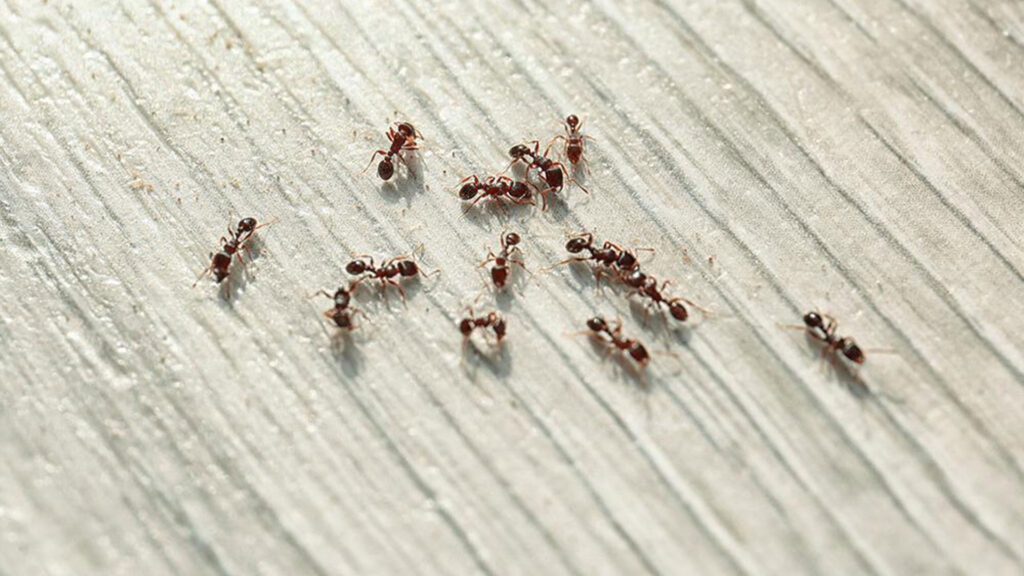
Most pest problems start the same way. One spider in the garage. A line of ants by the dishwasher. A wasp hovering near the eaves. You handle it, the problem goes away for a week, and then it comes back. The hard part is knowing when to call a pest control professional instead of buying another can of spray. The honest threshold has less to do with how many bugs you see and more to do with what kind of activity is happening, where, and how often.
When DIY Treatment Stops Being Enough
Store-bought sprays handle the bug in front of you. They almost never reach the source of the problem. If you treat the same kitchen baseboard three weekends in a row and the ants keep returning, the colony is somewhere you cannot reach with a can. That is the line where DIY treatment becomes a tax instead of a solution.
💡 Key Takeaway: Repeat activity in the same spot, even at low volume, is the single clearest sign that a colony or harborage has been established. The bug you see is the symptom. The colony you do not see is the problem.
Signs You Should Call a Pro
1. Recurring activity in the same spot
One sighting is a fluke. Two is a pattern. Three or more sightings of the same pest in the same location within a couple of weeks means there is a stable food source, water source, or harborage nearby. Common examples we see in homes across Alabama, Virginia, Utah, and Pennsylvania:
- Ant trails that reappear within days of cleaning the counter.
- Wasps repeatedly building in the same soffit corner.
- Roach sightings that move from one room to the next as you spray the first.
- Mice droppings that show up in the same drawer week after week.
2. Multiple species at once
If you are seeing ants and silverfish and the occasional roach, your home has conducive conditions that are friendly to several pest groups. Treating one species at a time with retail products leaves the conditions intact. A professional inspection looks at the structural and environmental factors that explain why several pests are present, then builds a treatment plan that addresses the cause, not the most visible symptom.
3. Structural risk
Some pests are nuisance. Some pests damage the building. The list of pests that can compromise structural integrity is short and worth memorizing.
| Pest | What It Damages | Why It Needs a Pro |
|---|---|---|
| Subterranean termites | Structural wood, framing, subfloors | Damage hidden until significant, treatment requires soil work |
| Carpenter ants | Damp wood: window frames, deck posts, roof joists | Active colony often nested inside the wood being damaged |
| Carpenter bees | Bare wood: eaves, fascia, deck rails | Repeat drilling year after year, treatment needs to address the next generation |
| Rodents | Wiring, insulation, drywall, HVAC ducts | Fire risk from chewed wiring, contamination of insulation |
| Powderpost beetles | Hardwood flooring, antique furniture, structural wood | Damage looks cosmetic but indicates active infestation |
If you suspect any of these, the cost of a paid inspection is small compared to the cost of waiting. According to the EPA and USDA, US homeowners spend an estimated $5 billion annually on termite control and repairs, and roughly 600,000 homes are affected each year. Most homeowners insurance policies exclude termite damage entirely, so the full cost of repair falls on the owner.
4. Health-sensitive households
Kids who crawl on the floor, pets that lick their paws after a walk, anyone with asthma or a known sting allergy, anyone who is pregnant or immunocompromised. These households need a treatment plan built with the household in mind, not a generic spray label that warns to keep people and pets off the surface for two hours. Our 9X Protection Plan starts with a free inspection that includes a conversation about who lives in the home and what they react to. Family- and pet-safe products are the default unless a specific problem requires something stronger, and even then we explain what is being used and where.
5. The bug is one you cannot identify
If you cannot tell whether the small brown ant in the kitchen is an odorous house ant or a young carpenter ant, the treatment differs entirely. Same with termites and flying ants during spring swarm season. A misidentification costs you a season of activity at best, a chewed-out wall stud at worst. Pros identify the species, then match the treatment.
💡 Key Takeaway: Species ID is the part of the job most DIY treatments skip. The same can of “ant killer” treats five common species, and at least two of them respond better to a different active ingredient and a different placement strategy.
What a Paid Inspection Actually Buys You
A free general pest inspection is one of the lowest-friction ways to find out whether you have a real problem or a passing one. Done well, the inspection covers interior and exterior, looks for conducive conditions like moisture and entry points, identifies the species driving the activity, and ends with a written assessment. The findings should tell you three things before any treatment is recommended.
- What pest is present and at what life stage. Adults versus active reproductive activity is a different problem.
- Where the pressure is coming from. Indoor harborage, exterior nesting, conducive conditions in the crawlspace or attic, all change the treatment plan.
- What is reasonable to expect from treatment. Some pests are cleared in one visit. Some require a 2-3 week recheck. Some need a multi-month plan because the lifecycle has to be broken at more than one stage.
That last point is where most retail products fail. A can of spray kills the adults you see. It does not break the cycle for pests that spend most of their life as eggs, larvae, or pupae out of sight. Fleas are the cleanest example. Treat only the adults and you will be back to square one in three weeks when the next round emerges from the carpet.
The Inspect, Protect, Prove Framework
Good pest service follows a sequence. We call it the 9X Protection Plan, and the structure is simple. Inspect first, before any product is applied. Identify the species, the source, and the conducive conditions that allowed the activity to start. Protect with a treatment plan matched to what the inspection found. Same-day and next-day service options are available in most of our service areas when the problem is urgent. Prove the work by recapping what was completed and providing a detailed video so the homeowner sees exactly what was treated and where.
The proof step matters more than people expect. Pest work happens in places homeowners do not go: behind appliances, under crawl spaces, on roof eaves at 20 feet. A short video showing the treated areas, the product used, and the technician’s observations turns the service from “they were here for an hour” into a document the homeowner can reference later if pressure returns.
💡 Key Takeaway: Inspection-first methodology costs the company more time on the front end, but it produces treatment plans that actually work. Skipping inspection in favor of spray-and-pray is how DIY products work, and it is also how some discount services work. Ask whether the inspection comes before the quote.
Quick Decision Guide
If you are still on the fence, this is the rough version of how we think about it on a first call. The right answer depends on what is actually happening at the property, which is why professional pest control starts with the free inspection rather than over the phone.
- One isolated sighting, no recurrence: Clean the area, seal an obvious entry point if you find one, watch for a week. Most one-off sightings do not return.
- Recurring sightings of one species: Worth a free inspection. Could be a small colony, could be a conducive condition that can be fixed in one visit.
- Multiple species, multiple rooms: Call. Several species at once almost always points to environmental conditions that need addressing.
- Termites, carpenter ants, rodents, or carpenter bees: Call. These are the structural-risk pests. Time is the variable that determines repair cost.
- Visible activity plus kids, pets, or health concerns in the home: Call. Even routine treatments should be planned around the household, and a pro can build that plan.
The reality is that most homeowners wait too long. We see it constantly in our Alabama and Virginia branches during spring termite season, in our Pennsylvania branches during fall rodent ingress, and in Utah anytime a pavement ant colony decides to come indoors after a heavy rain. A free inspection costs nothing. Treatment, when it is needed, is almost always cheaper than the damage the pest would have caused by the next season.
Have questions? Give us a call.
Frequently Asked Questions
How do I know if my ant problem is bad enough for professional treatment?
If the same ant trail returns within a week of cleaning the area, the colony is established and will keep coming back. One isolated trail near a door after heavy rain is usually a passing visit. A trail that reappears in the same spot three times in two weeks means there is a colony nesting in or under the structure, and the visible trail is one foraging path out of several. That is the threshold where retail bait stations stop being enough.
Is a professional inspection actually free, or is there always a charge?
A general pest inspection is genuinely free with most reputable companies, including ours. The inspector walks the property, identifies the species and the conducive conditions, and gives you a written assessment with a recommended treatment plan and price. You are under no obligation to schedule service. Specialty inspections like a wood-destroying-organism (WDO) report for a real estate transaction usually carry a fee because they require a formal written report, but a routine residential inspection does not.
Can I do termite treatment myself if I find a small mud tube?
No. Subterranean termites build mud tubes from a colony located in the soil, often 20 feet or more from the visible tube. Killing the termites inside the tube does nothing to the colony. Effective termite treatment uses either a liquid soil termiticide applied around the foundation or a bait system installed at intervals around the perimeter. Both require professional equipment and product registration. The visible mud tube is the symptom, not the source.
How quickly should I act if I see signs of a structural-pest problem?
Same week, ideally. Subterranean termites can damage structural wood at a rate that depends on colony size, temperature, and wood condition, but the typical mature colony causes meaningful damage over months to years rather than days. The reason to move fast is that hidden activity often predates the visible sign by months or years. Once you see mud tubes, frass, or wood that sounds hollow when tapped, the colony has already been working. A free inspection within a week of the first sign gives you the clearest read on how far the activity has progressed.
What is the difference between a “free inspection” and a “free quote” over the phone?
A free inspection means a licensed technician walks your property, looks at the actual conditions, and gives a recommendation based on what is there. A phone quote is a guess based on home size and pest type. For routine recurring service plans the phone quote is sometimes fine. For anything involving recurring activity, suspected structural pests, or multiple species, insist on the in-person inspection. The price difference is rarely meaningful, and the accuracy difference is significant.