
Pharaoh Ants
Description of Pharaoh Ants
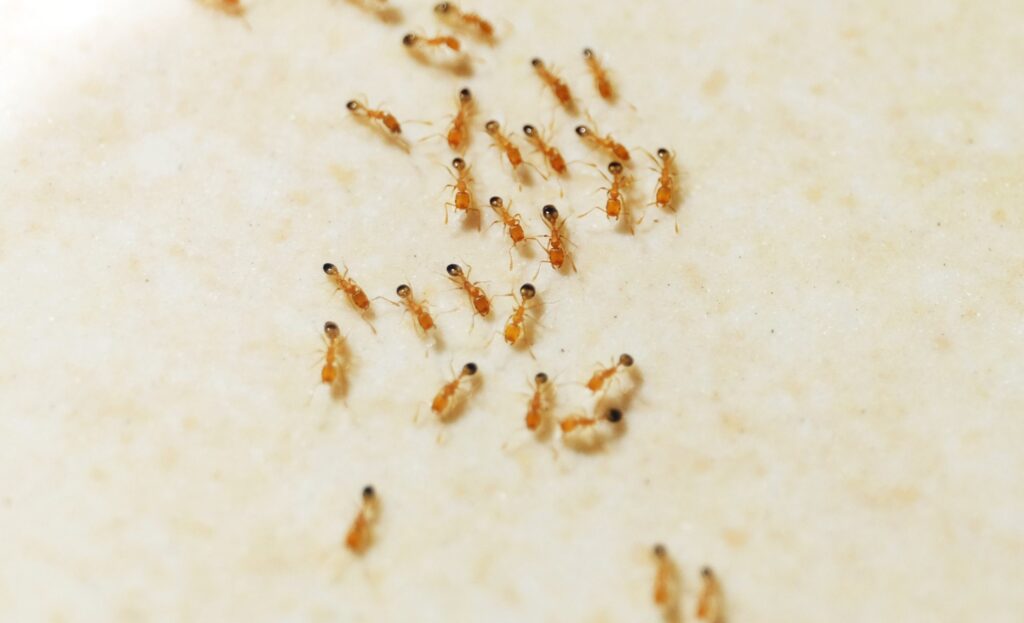
Pharaoh ants exhibit a color range from yellow to light brown and measure approximately 1/16 inch in length. Notably, they possess a three-segmented club at the end of their antennae.
When Are Pharaoh Ants Most Active?
- Very Active
- Active
- Not Active
January
February
March
April
May
June
July
August
September
October
November
December
Insights into Pharaoh Ants
Did you know that Pharaoh ants are so diminutive that an entire colony can thrive under a wet mop in a broom closet or within a light switch box on a wall? They are commonly found in commercial establishments such as hospitals, grocery stores, and food-handling facilities, utilizing electrical and telephone wires as a transportation network through walls and between floorboards.
Biology of Pharaoh Ants
Pharaoh ants do not engage in swarming behavior. Females mate within nests, and new colonies form through a process called budding, where a portion of the main colony relocates to a new site.
Colonies can comprise hundreds of thousands of ants, with queens, approximately twice the size of workers, laying 350 to 400 eggs each during their lifetimes. The entire life cycle, completed in 38 to 48 days at room temperature, proceeds year-round indoors.
Where Pharaoh Ants Establish Nests
Outdoors, Pharaoh ants typically inhabit shaded areas or shelter beneath debris. Indoors, they favor warm, humid environments near food and water sources, nesting in areas inaccessible to humans, such as wall voids, behind baseboards, and beneath floors.
Dietary Habits of Pharaoh Ants
Pharaoh ants display omnivorous feeding habits, with a preference for sweets. They also consume protein, grease, and small insects.
Risks Associated with Pharaoh Ants
While Pharaoh ants do not bite or sting, they are notorious carriers of more than a dozen disease pathogens, including salmonella and Streptococcus pyogenes. Particularly concerning is their propensity to infest hospital settings, where they pose significant health risks by infiltrating patient wounds and intravenous bottles.
Understanding Pharaoh Ant Infestations
Pharaoh ants gain entry into homes and structures through exterior cracks, gaps, or openings. Once they locate a food source, they establish pheromone trails on surfaces to guide other ants to the site.
Effective Pharaoh Ant Control Measures
To address Pharaoh ant infestations, enlist the expertise of Ninefold Pest. Our local pest control specialists are highly trained and equipped to devise tailored treatment plans for eliminating Pharaoh ant activity on your property.